Standifer Lab
The nociceptin/orphanin FQ peptide receptor (NOP; also known as ORL1 and KOR3), and its endogenous agonist, nociceptin/orphanin FQ (N/OFQ), bi-directionally modulate CNS and immune system functions, including (but not limited to) pain sensitivity, anxiety, cognition, vasodilation and monocyte chemotaxis. N/OFQ appears to function as a physiological modulator, trying to restore homeostasis. Over the last 20 years, our lab has examined the role of N/OFQ/NOP in three devastating physiological conditions: TBI, PTSD and chronic pain. We found that N/OFQ levels increase in various brain regions, CSF and/or serum over time following TBI, traumatic stress or chronic nerve injury. We hypothesize that the N/OFQ/NOP system becomes dysregulated, either in response to, or because of these conditions.
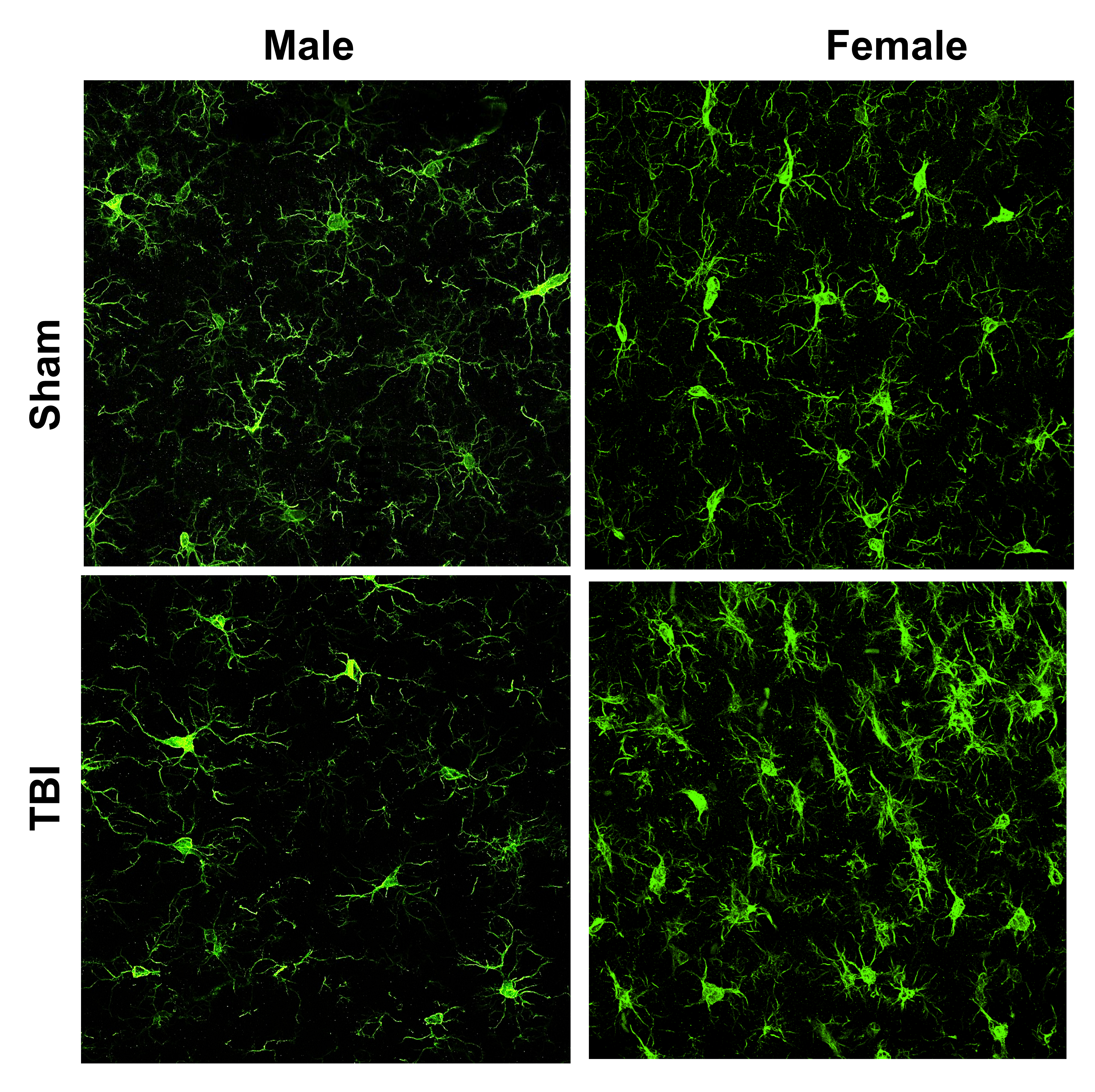
We utilize cellular and preclinical models of TBI (focal impact and concussive) and of PTSD to interrogate the ability of NOP receptor modulators to prevent or reverse TBI- and/or PTSD-induced vestibular and cognitive deficits, anxiety-like behaviors and hyperalgesia in male and female rats. We found that elevated levels of N/OFQ are associated with vestibular deficits and hyperalgesia following exposure to a traumatic physical or psychological stress. A single, acute injection of NOP antagonist within 30 min of TBI delayed the appearance of vestibular deficits but prevented the development of oxidative damage 9 days later. Our current studies explore changes in cell morphology and activation state following trauma, with or without NOP receptor modulator treatment.
Another study examines whether exposure of female rats to traumatic stress prior to conception alters their mothering behaviors, and whether and how this may affect baseline behaviors and responses in their pups.